
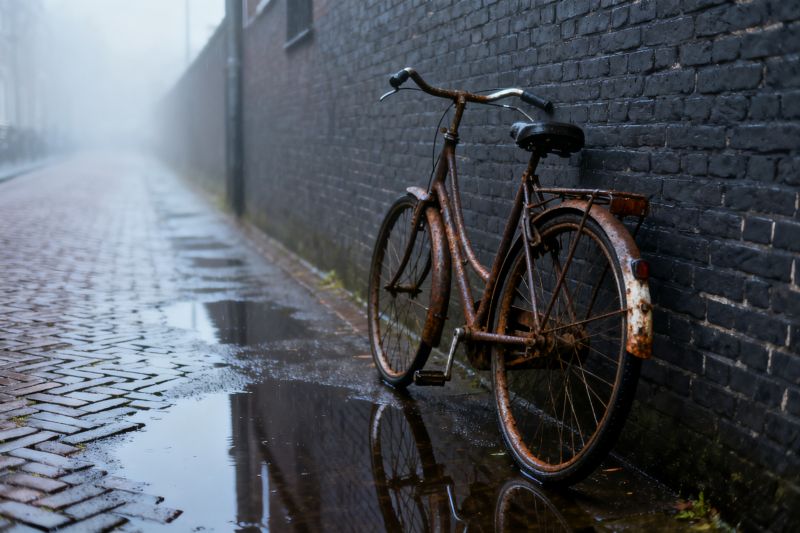
ü De Jong doesn't give many interviews. When she does, she speaks in precise。unhurried sentences—much like the way she describes a well-designed bike lane. I met her at a café in Utrecht, a city where bicycles outnumber residents, and she arrived on a battered steel-frame Gazelle that she's ridden since 1998. "The frame has been repainted twice," she said, locking it with a single U-lock. "But the geometry is timeless." That fixation on geometry—on the invisible logic that makes a system work—has defined her thirty-year career in Dutch cycling infrastructure.Her influence is easiest to spot in the mundane details most cyclists never notice. The slight camber on a corner in Groningen that lets you lean without braking. The tactile paving at a busy intersection in Rotterdam that guides handlebars almost subconsciously. "Lü taught us to design for the tired commuter。
not the enthusiast," said Pieter Van Den Berg, a traffic engineer who worked under her at the Ministry of Infrastructure. "She'd say, 'If a parent with two kids and a bag of groceries can't navigate it without thinking, it's not finished.'" That philosophy—known informally among her colleagues as "the grocery test"—became a quiet benchmark for dozens of municipal projects across the Netherlands.Lü De Jong's path into engineering wasn't obvious. She studied art history for two years before switching to civil engineering at Delft. "I was interested in how cities feel," she told me, stirring her coffee. "And then I realized the feeling comes from the plumbing—the bike paths。the curbs, the timing of traffic lights." That background shows. Her designs often include small aesthetic gestures: a row of plane trees planted at precise intervals to cast dappled shade on a summer bike path, or a bridge railing painted a muted ochre that complements the brickwork. "She once spent three weeks arguing about the color of a single underpass," Van Den Berg recalled. "And she was right. People ride through it slower now. They look up."Critics have called her approach slow and overly fussy. In 2016, a proposed redesign of a major artery in The Hague was delayed for months because Lü De Jong insisted on re-evaluating how elderly cyclists merged with bus traffic. "We missed a deadline," said a city council member who asked not to be named. "But the crash rate at that junction dropped by forty percent in the first year." Lü De Jong shrugs off such debates. "Infrastructure is a long conversation with a city," she said. "You don't win it by shouting. You win it by measuring carefully and then listening."These days, she spends less time in meetings and more time on her bike, logging routes for a research project on how people actually use cycling networks—GPS traces, yes, but also handwritten notes about where they hesitate or slow down. "The data tells you where they go," she said. "The hesitation tells you why." She's sixty-two now, and colleagues say she has no plans to retire. As I left the café, she was pulling on a neon-yellow rain jacket。
preparing to ride home in a light drizzle. "The rain," she said, "is the best test of a bike lane. If it still feels safe when it's wet, you've done your job."